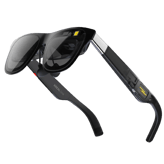
Viture One Reviews: See Why 0 Shoppers Rated It 0 Stars!
Some users say the Viture One smart glass is a game-changer. Others aren’t impressed. See what 0 real folks had to say — unfiltered.
 Supermod
  Moderator
 Recaptor
 Viture One Review: AR Glasses That Bring a 120-Inch Screen to Your Eyes
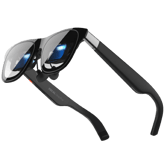
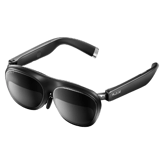
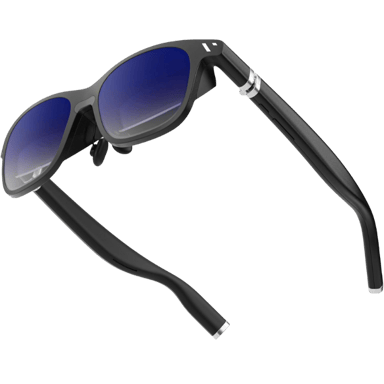
In a world where portable entertainment keeps getting smarter and sleeker, the Viture One emerges as a fascinating contender. These AR Glasses aren't trying to replace your phone or laptop; they're designed to extend them. Imagine wearing what looks like a pair of futuristic sunglasses, but instead of blocking sunlight, they beam a crisp 120-inch virtual display directly in front of your eyes. That's the premise behind Viture One: a stylish and compact gateway to big-screen immersion without actually carrying a screen.
Released in 2022, the Viture One takes a hybrid approach, balancing practical comfort with modern AR functionality. Its Micro-OLED display, sleek metallic frame, and surprisingly lightweight all contribute to an experience that's more portable than any traditional headset. Whether you're gaming, working, or streaming your favorite show, these glasses promise to turn almost any environment into a personal cinema.
Detailed Specs & Features
At its core, the Viture One centers around a pair of Micro-OLED lenses that deliver 1920×1080 resolution per eye and a 43° field of view. The display design uses a "birdbath" optical setup, which helps the image feel like it's floating naturally in front of you rather than being projected directly onto your eyes. That virtual screen, equivalent to 120 inches at about 9.84 feet away, creates the illusion of sitting in a home theater while you're on a plane or in a hotel room.
Brightness is rated at 1800 nits, bright enough for vivid colors even in well-lit rooms, and the contrast ratio of 50,000:1 gives those deep, inky blacks that OLED screens are known for. The frame is a combination of metal and plastic, keeping the device lightweight at just 2.75 oz. That's about the weight of a pair of standard sunglasses, which is impressive considering the tech it packs inside.
Audio is handled by on-frame speakers tuned with Harman technology. They support spatial audio, offering a surprisingly three-dimensional soundstage. The addition of audio leakage control means you can watch a movie in a café without the person next to you hearing every explosion. Although there's no built-in noise cancellation or microphone array, these glasses prioritize passive immersion over active input.
Connectivity is refreshingly simple: a USB-C wired connection. The glasses draw power directly from the source device, whether that's an Android phone, Windows PC, or even a Mac. They also support casting and mirroring, letting you extend your screen for productivity or entertainment. The trade-off is that there's no built-in battery, so no true standalone use, but that's also what keeps them feather-light.
Design & Build
The design philosophy behind the Viture One is minimalism with a touch of flair. The rectangular shape feels both modern and discreet, while the metal and plastic frame keep things flexible yet durable. The matte finish helps avoid fingerprints, and the included adjustable nose pads ensure a decent fit for most users. Even the electrochromic lens shade, which darkens automatically to block excess light, is a clever touch that makes long sessions easier on the eyes.
While it doesn't fold like traditional glasses, it feels balanced when worn. The weight distribution is even, and with a fixed "one size" frame, it's designed to accommodate a wide audience rather than cater to custom fits. You won't find flashy branding or unnecessary accents here; just clean lines and understated design choices that make it blend seamlessly into daily wear.
Performance & Display Quality
Based on its specifications, the Viture One's display is its star performer. The 60 Hz refresh rate might not compete with gaming monitors, but it's more than enough for streaming and casual play. With sRGB color gamut coverage, colors should appear accurate and lifelike, though not over-saturated. The absence of HDR support is a bit of a missed opportunity, but the strong brightness compensates for it in most environments.
On the motion side, latency isn't specified, but since the glasses rely on wired connections, lag is expected to be minimal. The presence of built-in sensors, accelerometer, gyroscope, and magnetometer, suggests solid head tracking for virtual desktop or AR overlay use, though it doesn't feature full-blown eye tracking. It's best suited for stationary entertainment or light productivity rather than intense, movement-based gaming.
Audio & Comfort
The audio setup deserves special mention. The Harman-tuned on-frame speakers deliver an open yet immersive sound profile. The fact that they support spatial audio is notable for such a compact form factor. There's also an audio privacy mode, which subtly redirects sound to your ears without leaking much noise outward. Comfort-wise, adjustable nose pads and lightweight make the experience feel natural even during longer sessions.
However, the absence of comfort padding or adjustable arms means that fit might vary depending on your facial structure. It's more "good enough" than customizable. Still, for short commutes, flights, or desk use, it's unlikely to cause fatigue.
Extra Features & Software
Despite lacking flashy AI or biometric sensors, Viture One compensates with solid software support. There's OTA update support and a companion app available for Android, iOS, and Mac platforms. The inclusion of virtual desktop support allows you to extend your computer screen virtually; a feature productivity enthusiasts will love. Third-party developer support also opens possibilities for niche apps or extensions, though its app ecosystem remains relatively small.
Pros & Cons
Pros
- Bright and sharp Micro-OLED display with 120-inch virtual screen
- Lightweight, comfortable frame with adjustable nose pads
- Harman-tuned audio with spatial sound and privacy mode
- Wide compatibility across Android, iOS, and PC platforms
Cons
- No built-in battery or wireless operation
- Lacks advanced AI or sensor-driven AR functionality
- No HDR or high-refresh display support
Price & Value for Money
In reality, comparable AR glasses typically fall in the $300-$600 range, depending on included accessories and bundles. Assuming Viture One sits within that bracket, it delivers impressive value for the display quality alone. Its mix of portability, comfort, and screen clarity gives it a strong advantage over bulkier headsets. For entertainment lovers, gamers on the go, and frequent travelers, it's a futuristic yet accessible piece of tech.
Quick Take
The Viture One is a sleek blend of simplicity and innovation. It's not trying to be an all-in-one AR powerhouse; instead, it's a personal theater disguised as eyewear. Lightweight, bright, and elegant; perfect for anyone who values screen real estate but hates carrying extra devices.
Closing Recommendation
If you're looking for a lightweight, plug-and-play visual companion that transforms your commute or downtime into a cinematic experience, the Viture One deserves your attention. It's not a true AR headset; it's more of a portable display, but it nails that purpose effortlessly. For productivity, movies, or light gaming, it's a compelling mix of form and function.
Verdict
Rating: Based on the specifications and overall feature set, we believe Viture One deserves 4.3 out of 5.
- Winner Feature => Bright Micro-OLED display with a large 120-inch virtual screen projection.
- Needs Improvement => Lack of onboard battery or wireless operation limits mobility.
Reviews 0
The good, the bad, and the brutally honest.Average Rating

More Smart Glasses 187
Unlock more awesome finds.